
The Origins: Why the QR Code Was Invented
The QR code (Quick Response code) was invented in 1994 by Masahiro Hara, a Japanese engineer working at Denso Wave, a subsidiary of the Toyota Group. At the time, manufacturing processes were becoming increasingly complex, and traditional barcodes were slowing things down.

The Problem with Barcodes
- Limited data capacity: Standard barcodes could only store around 20 characters.
- Inefficiency: Workers often had to scan multiple barcodes on each box, causing delays and even repetitive strain injuries.
- Directional scanning: Barcodes had to be read from a specific angle, which wasn’t practical on fast-moving assembly lines.
The auto industry needed something smarter, faster, and more efficient.
Inspiration Struck: The Go Board and Finder Pattern
During a lunch break, Hara found inspiration from an unlikely source: the board game Go, with its grid of black and white stones. This sparked the idea for a two-dimensional code that could hold vastly more data in less space.

To make scanning reliable and orientation-free, Hara and his team designed the three distinctive finder patterns you see in the corners of every QR code. These patterns, with their unique 1:1:3:1:1 ratio, allowed scanners to instantly recognize and read the code from any direction.
After 18 months of development, the first QR code was born — capable of storing thousands of characters, including Japanese Kanji, and readable 10 times faster than traditional barcodes.
Open Access: Why QR Codes Spread Worldwide
One brilliant strategic move ensured the QR code’s survival: Denso Wave decided not to enforce its patent rights.
By making the QR code free to use, they allowed businesses, developers, and innovators around the globe to adopt it without restrictions or licensing fees. This openness fueled experimentation and widespread adoption across industries.
The Smartphone Era and Beyond
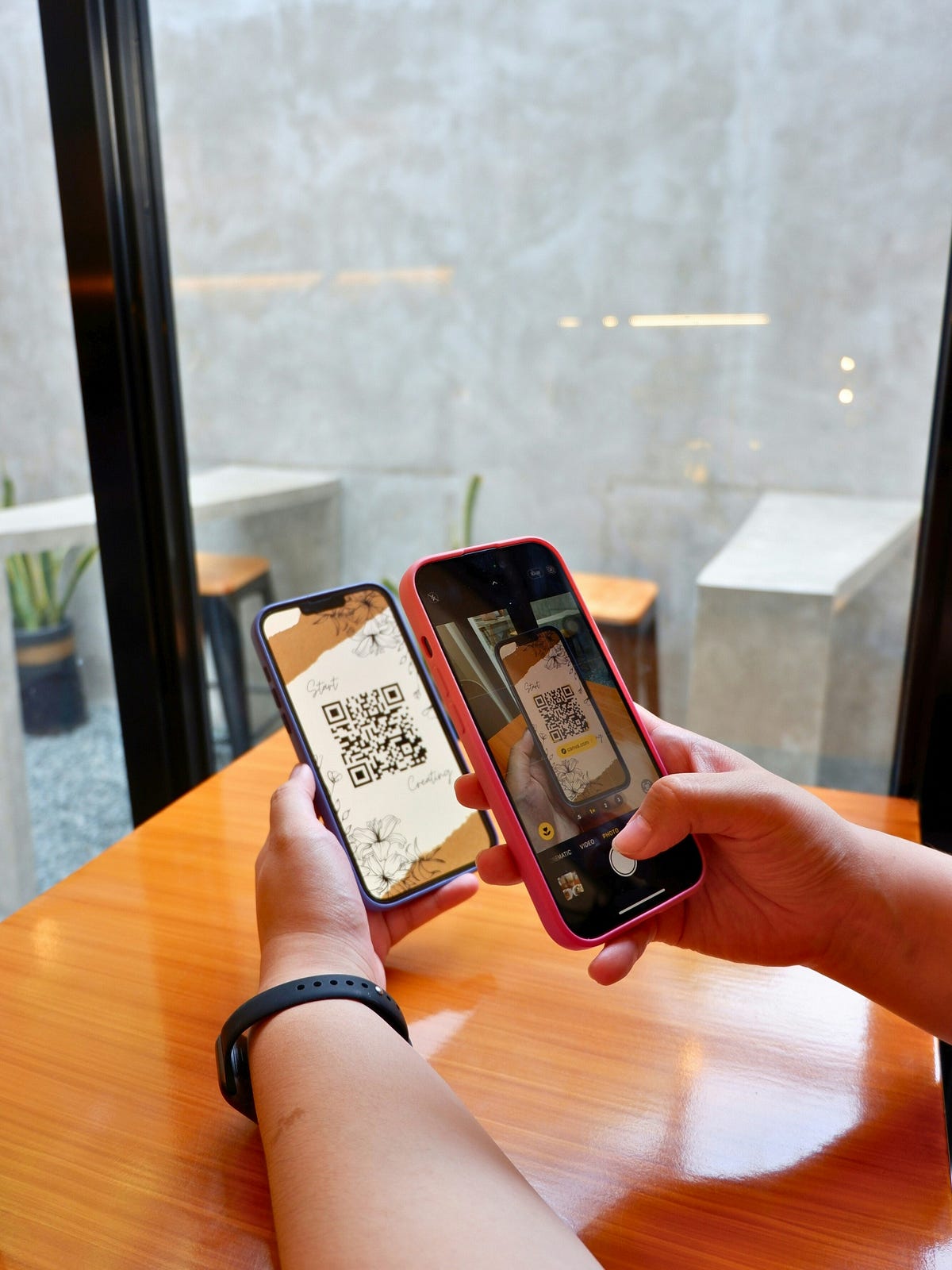
Although QR codes existed since the 1990s, they didn’t truly take off until camera-equipped smartphones became common in the early 2000s. Japan led the way, with mobile internet users scanning QR codes for websites, coupons, and promotions.
By 2017, adoption skyrocketed globally when Apple and Google integrated QR scanning directly into their camera apps, eliminating the need for third-party scanners.
The Pandemic Catalyst
The COVID-19 pandemic pushed QR codes into the mainstream like never before. Suddenly, they were everywhere:
- Restaurant menus → Contactless dining experiences
- Digital payments → Faster and safer transactions
- Healthcare → Vaccine certificates and contact tracing
- Retail & marketing → Product details, offers, and customer engagement
What was once a factory tool had now become an everyday digital bridge between the physical and online world.
The Lasting Legacy of QR Codes
From automobile assembly lines to global e-commerce, the QR code’s journey shows how innovation, accessibility, and timing can transform a niche technology into a universal tool.
Today, QR codes continue to evolve — with applications in augmented reality, cryptocurrency, smart packaging, event ticketing, and beyond.
The simple square that started as a factory fix is now a symbol of connectivity, speed, and convenience in the digital age.
Key Takeaways
- Invented in 1994 by Masahiro Hara at Denso Wave for Toyota.
- Solved barcode limitations of low capacity, inefficiency, and directional scanning.
- Inspired by the Go board game and optimized with finder patterns.
- Made free to use, fueling global adoption.
- Gained momentum with smartphones and became essential during the COVID-19 pandemic.
Final Thought
The story of the QR code is a powerful reminder that sometimes the most impactful inventions come from solving everyday problems. What started as an innovation for car parts now connects billions of people to information in seconds — no matter where they are.
So, next time you scan one of those black-and-white squares, you’ll know the fascinating history behind the QR code.
Have you ever used a QR code in an unexpected way — maybe for payments, events, or even art? Share your experience in the comments below!
Follow @versaverse360 for more stories on innovation, technology, and marketing that shape our world
The story of the QR code proves that even the simplest ideas can become global revolutions when paired with creativity and timing. Stay tuned for more insights into the inventions and strategies that change how we live and connect.
If you enjoyed this article, give it a thumbs up! 👏 Your support helps us create more valuable content.
📸 Instagram: @VersaVerse360
▶️ YouTube: VersaVerse360
📰 Blog: https://medium.com/@versaverse360
📩 Email: versaverse360@gmail.com
Comments
Post a Comment